
Glass jars containing rare earths are pictured inside the storage room of Tradium, a company specialized in trading rare earths, in Frankfurt am Main, western Germany, on Nov. 4, 2025. Kirill Kudryavtsev/AFP via Getty Images
The European Union is stepping up ties with Brazil as it seeks to reduce reliance on China’s dominance of critical minerals used in electric vehicles, electronics, and defense systems.
Brazil is the European Union’s “most strategic partner” in Latin America for critical raw materials, Sikela said during the visit.
According to the European Commission, Sikela’s trip from June 19 to June 24 is intended to focus on partnerships that support processing and industrial development in Brazil rather than exports of raw materials.
His trip includes a visit to the rare earths project of Australian-listed Viridis Mining and Minerals in Poços de Caldas, in Minas Gerais state. It is one of four priority projects selected to deepen cooperation between Brazil and the EU.
Rare earth elements are used in magnets, batteries, and electronics. China is the world’s largest producer and dominates processing capacity, giving it an outsized role in global supply chains.
Related Stories
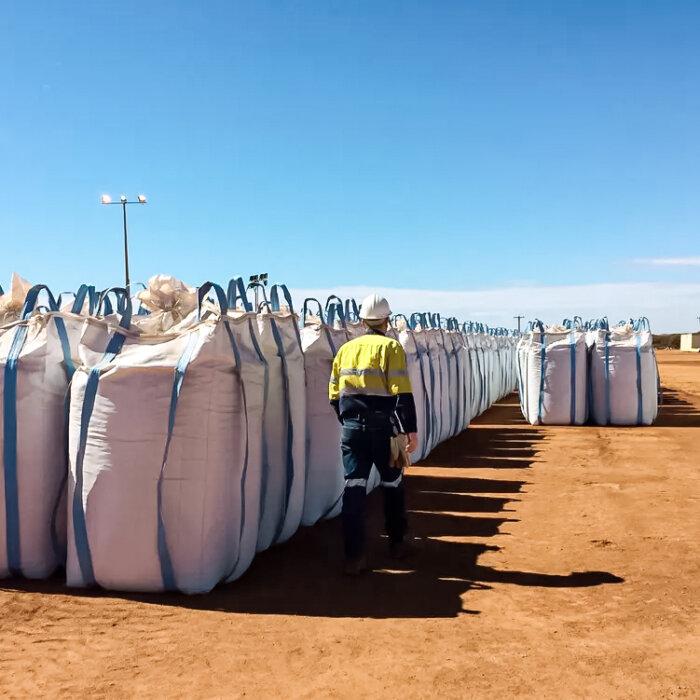
Viridis inaugurated a pilot plant that converts ore into mixed rare earth carbonate, with commercial production planned from 2028.
Viridis has signed a non-binding letter of intent with chemicals group Solvay to supply material to a processing plant in France.
Solvay said the agreement would strengthen “the resilience and diversification of critical materials supply chains.”
The European Commission says its approach is designed to create jobs, transfer technology, and maintain high environmental standards. Brazilian officials have also sought to increase domestic processing to capture more value from the country’s mineral resources.
The company has said it is in advanced talks with customers in Europe and the United States.
Europe’s push reflects growing concern over China’s position in critical minerals. Beijing accounts for the majority of the world’s rare earth processing and has become a focal point in efforts by Western governments to diversify supply chains.
The EU has pursued similar partnerships elsewhere, including with Namibia on critical raw materials and green industry.
Cooperation with Brazil has expanded in recent years through the EU’s Global Gateway infrastructure program and negotiations over the Mercosur trade agreement. Brussels and Brasília have also increased contacts on energy transition and industrial policy.
The pandemic and Russia’s invasion of Ukraine exposed vulnerabilities in global supply chains and accelerated efforts to secure alternative sources of strategic materials. Since then, the EU has sought to build multiple supply routes rather than rely heavily on any single country.
Talks between the EU and Brazil on a formal memorandum of understanding on critical minerals are continuing. No final funding commitments for individual projects have been announced.
Further meetings between European and Brazilian officials are expected later this year as both sides seek to deepen cooperation in the sector.
Reuters contributed to this report.