
An alleged detention facility in northwestern Xinjiang region, China, on July 19, 2023. Pedro Pardo/AFP via Getty Images
Beijing’s probe into a former Xinjiang official signals Chinese leader Xi Jinping is using anti-corruption campaigns to evade accountability for Uyghur repression while asserting total control over the party, analysts say.
Zhu Changjie—former vice chairman of the government of Xinjiang Uyghur Autonomous Region—is under investigation, China’s Central Commission for Discipline Inspection (CCDI) and the National Commission of Supervision announced on June 20.
Zhu is suspected of “severe violations of Party discipline and the law,” the Chinese regime’s two main anti-corruption bodies said.
The Standing Committee of the Communist Party of China Xinjiang Uyghur Autonomous Regional Committee, the territory’s top party decision-making body, hailed the case on June 22 as evidence of Beijing’s resolve to “carry the anti-corruption struggle through to the end.”
Public records show Zhu, 69, spent much of his career in Xinjiang, a northwestern region home to most of China’s Uyghur population.
He took over the Xinjiang Public Security Department in 2009—the year the region was shaken by the July 5 Incident, one of the deadliest outbreaks of ethnic violence in China in decades.
Related Stories

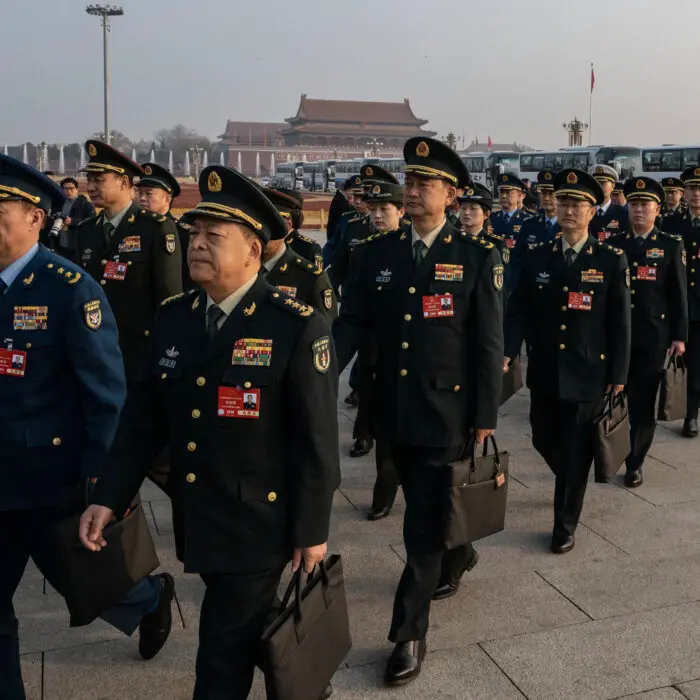
Zhu held the role for nearly eight years and enforced the crackdown orchestrated by the Chinese Communist Party (CCP) in Xinjiang, implementing repressive measures and establishing re-education camps in 2014 under the guise of “vocational education and training centers.”
The regime has since confined at least 1 million Uyghurs in such facilities, a campaign Washington has called a genocide.
Sun Kuo-hsiang, a professor of international affairs and business at Nanhua University in Taiwan, said the investigation into Zhu is likely driven by Beijing’s fear that the sensitive information he amassed during his hardline tenure has become uncontrollable.
“A record of ruthless suppression only shows an official was useful at a specific time, but those exact same past merits turn into a liability when the party center moves to clean house,” Sun told The Epoch Times.
“This proves that loyalty within the CCP is purely transactional.”
Ilshat H. Kokbore, a Uyghur political commentator, said the probe is merely a thin pretext given the regime’s systemic corruption.
“All the CCP officials are corrupted. No one is clean,” Kokbore told The Epoch Times. “So, if the party wants to purge somebody, it just uses ‘anti-corruption’ as an excuse.”
Kokbore said the actual goal of such purges is to silence direct witnesses to the CCP’s genocide against Uyghurs.
“Xi wants to get rid of these officials so he can hide himself from this accountability from the international legal instrument,” Kokbore said.
“That’s why [Beijing has been] intensifying its purge of high-ranking CCP officials in the [Xinjiang] Uyghur Autonomous Region who also committed crimes against humanity.”
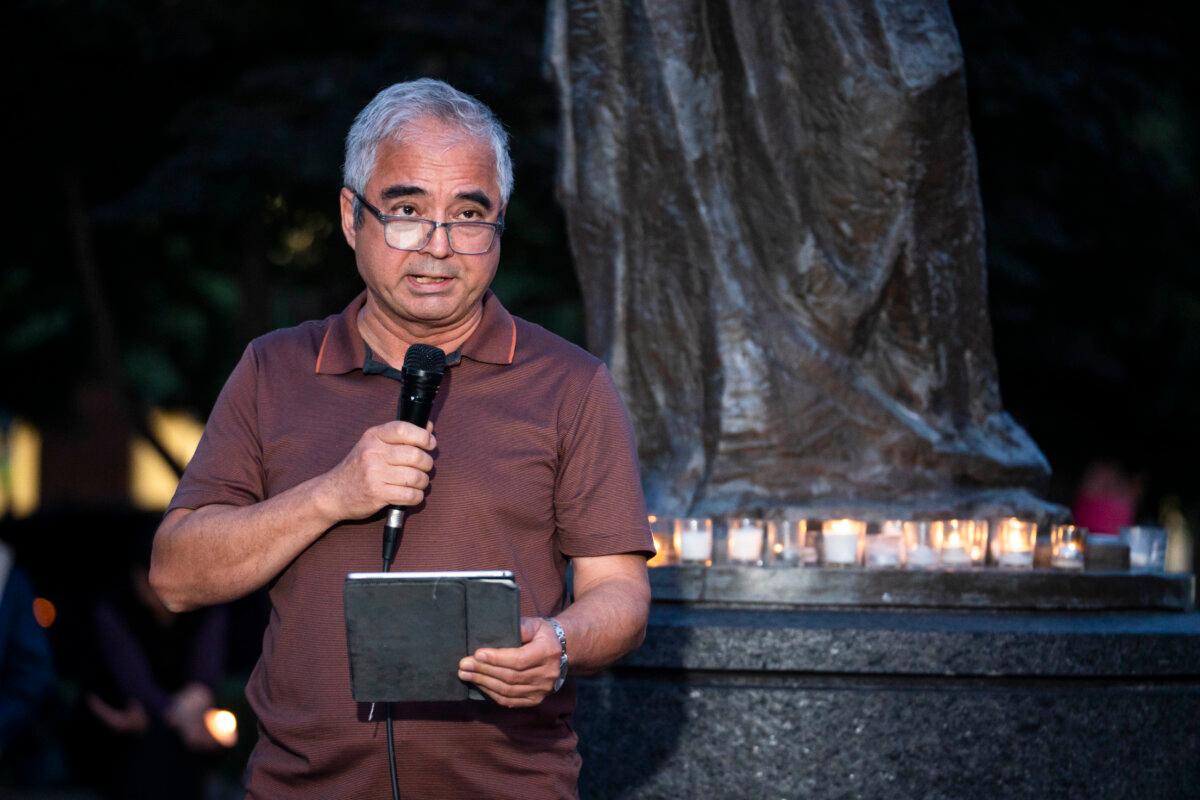
Ilshat Kokbore, research director at the Uyghur Studies, speaks during a candlelight vigil to commemorate the 1989 Tiananmen Square Massacre, at the Victims of Communism Memorial in Washington on June 4, 2026. Madalina Kilroy/The Epoch Times
This year, several senior officials across Xinjiang have been ousted, including Chen Weijun, former vice chairman of the regional government, and Jin Zhizhen, former vice chairman of the regional committee of the Chinese People’s Political Consultative Conference.
Beginning in 2022, the regime has carried out a succession of political purges, ensnaring a number of high-ranking figures in disciplinary probes.
‘New Mission’
Shih Chien-yu, an associate research fellow at the Institute for National Defense and Security Research’s Division of National Security Research in Taipei, said the move also signals Xi’s broader plan to reshape Xinjiang’s security apparatus.
“Essentially, everyone tied to the old security structure needs to go, because there is a new mission now,” Shih told The Epoch Times.
“This is because Xi wants to reposition Xinjiang as a corridor linking China’s northwest to the Eurasian continent.”
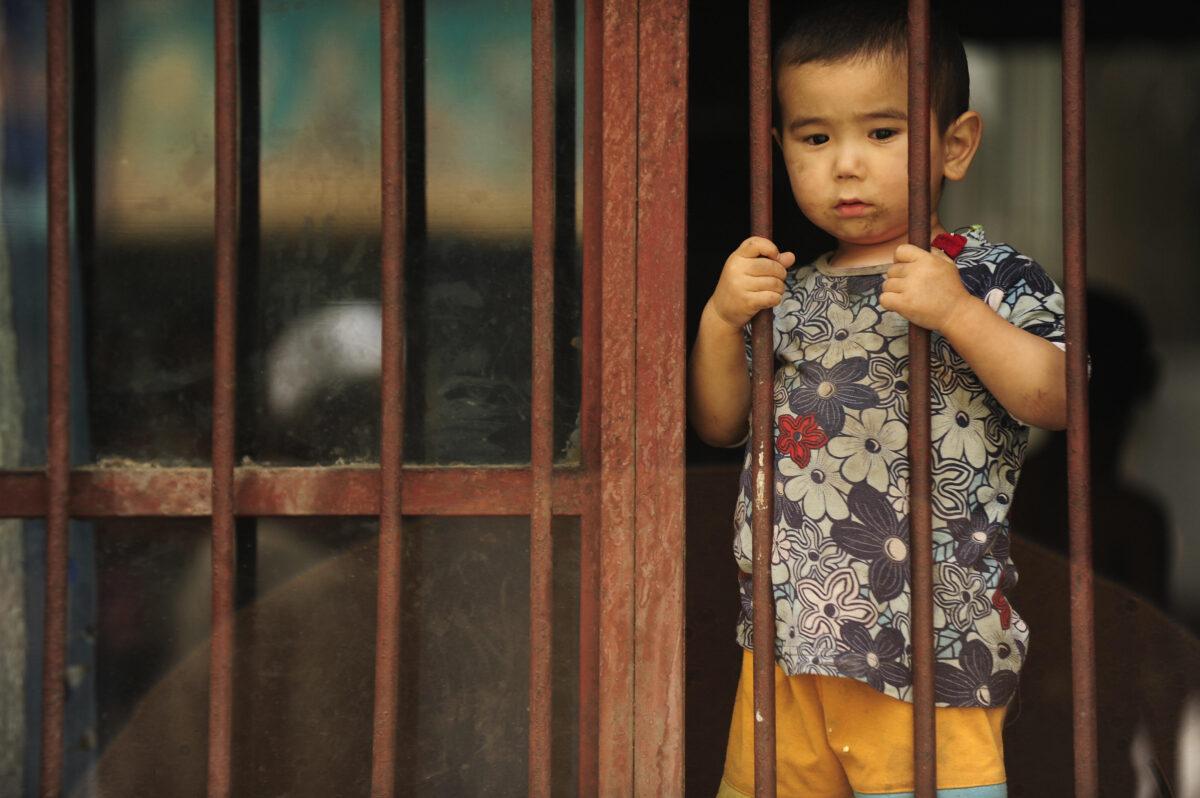
A young Uyghur boy looks out from his home in Urumqi, China’s Xinjiang region, on July 12, 2009. Peter Parks/AFP via Getty Images)
Shih said the ouster of senior officials, such as Chen and Jin, aims to remove local power brokers and consolidate the CCP’s financial grip over the region.
“Beijing simply no longer sees a need for middlemen,” Shih said. “It wants to intervene directly in Xinjiang’s economic development.”
Shih said this structural shift suggests the CCP is moving away from mass internment toward more pervasive administrative control over the region’s ethnic communities.
“Future policy won’t be about closely monitoring minorities; the approach will ‘deepen ethnic governance’ to ensure their absolute loyalty to Beijing,” Shih said.
“However, what lies ahead for Xinjiang remains unclear.”
Total Control
Sun said Xi has used anti-corruption drives to reshuffle the CCP hierarchy.
“The downfall of someone like Ma Xingrui, a former Xinjiang Party secretary promoted and trusted under Xi’s tenure, is a case in point,” Sun said.
“In other words, by carrying out sustained purges, Xi signals to every official that loyalty is never assumed and must be continuously re-earned in the eyes of the leadership.”
Ma was accused of serious violations of discipline and law and placed under investigation by CCDI in April.
He was subsequently stripped of his lawmaker post in the National People’s Congress (NPC)—China’s top legislative body—according to a June 27 announcement by the Standing Committee of the 14th NPC.
Sun said the ongoing purge campaign is designed to root out any trace of wavering across the party ranks ahead of the 21st Party Congress—a leadership conclave in late 2027 where top personnel decisions are expected to be made.
“The aim is to clear out networks deemed unreliable and open critical positions for trusted figures,” Sun said.
Sun added that while these actions do not prove every fallen official is an active dissenter, they demonstrate Xi’s total control over personnel appointments, creating a chilling effect throughout the party.
“This makes clear that the CCP’s distinction between anti-corruption campaigns and factional cleansing has grown increasingly blurred,” Sun said.