
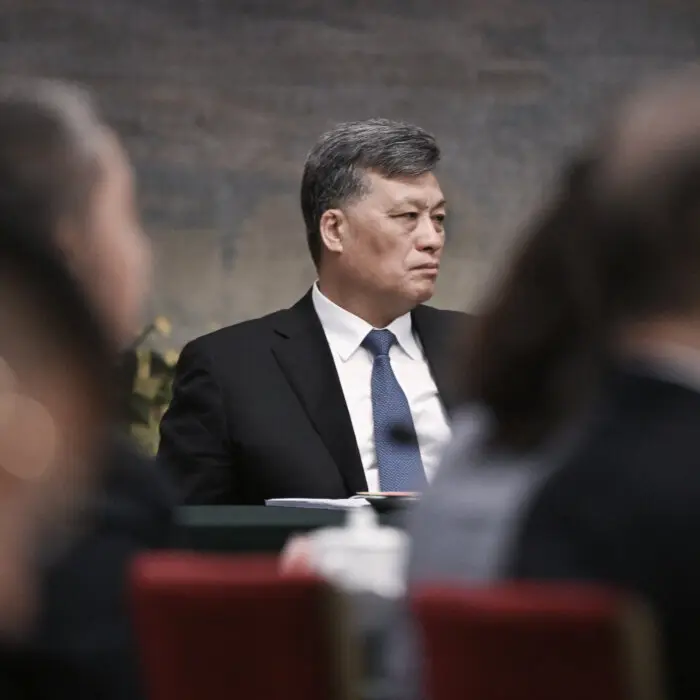
Xinjiang Communist Party Secretary Ma Xingrui attends the Xinjiang delegation meeting during the 14th National People’s Congress (NPC) in Beijing on March 7, 2024. Greg Baker/AFP via Getty Images
Since Xi took power in 2012 and launched his anti-corruption campaign, notices against many purged senior officials have gone beyond financial misconduct. They have accused officials of creating personal factions, concealing disloyalty, or seeking power outside the leadership structure controlled by Xi.
Ma’s notice contained none of those more explicit accusations.
In the CCP’s disciplinary language, such charges portray an official as building a personal power base or withholding obedience from the Party’s top leader.
“This wasn’t just a financial matter; there were political factors at play,” Cai said. “They aren’t being mentioned because the implications are too broad and involve too many people.”
Related Stories
Analysts See Effort to Limit Fallout
Cai said the emphasis on financial misconduct and “family corruption” allowed the Party to punish Ma without publicly expanding the case into an examination of the political relationships around him.
A broader account, he said, could implicate more officials and create anxiety within the CCP’s upper ranks ahead of its next national congress, expected in 2027.
Ma’s family and Xi’s wife, Peng Liyuan, are both from Yuncheng County in eastern China’s Shandong Province. Earlier Epoch Times reporting cited sources and commentators who described longstanding ties between their families.
Earlier Insiders Pointed to Loyalty
Questions about Ma’s political standing emerged before the final disciplinary notice.
One source described the central issue as Ma becoming “politically uncontrollable.”
The initial announcement also omitted the title “comrade” before Ma’s name, a departure the earlier report described as an indication that the CCP had already reached a severe political judgment.
Ma, 66, served on the Politburo, the CCP’s second-highest decision-making body, and previously held top posts in Xinjiang, Guangdong, and Shenzhen.
The official notice said Ma’s suspected bribery offenses and related assets had been transferred to prosecutors. His expulsion from the CCP still requires ratification at a future plenary meeting of the Central Committee.