
Beijing’s expansionism against Taiwan faces mounting global pushback, yet experts warn the regime will defy the pressure and relentlessly squeeze the island just short of war.
The UK, France, and Germany expressed concern about Chinese activity in waters east of Taiwan on June 24.
Chinese actions “threaten regional stability and the freedom of navigation and safety of international shipping,” according to a joint statement issued by the British Office Taipei, the French Office in Taipei, and the German Institute Taipei.
The American Institute in Taiwan (AIT), the de facto U.S. embassy in Taipei, said the same day that China had “seriously undermined regional stability,” according to a press release from Taiwan’s Ministry of Foreign Affairs.
“The United States rejects any Chinese claim to interfere with freedom of navigation and overflight … and urges China to cease its military, diplomatic, and economic pressure against Taiwan,” AIT said.
The responses from the four countries followed Chinese provocations on June 6, when Beijing dispatched several government ships in an attempt to breach Taiwan’s restricted waters.
Related Stories
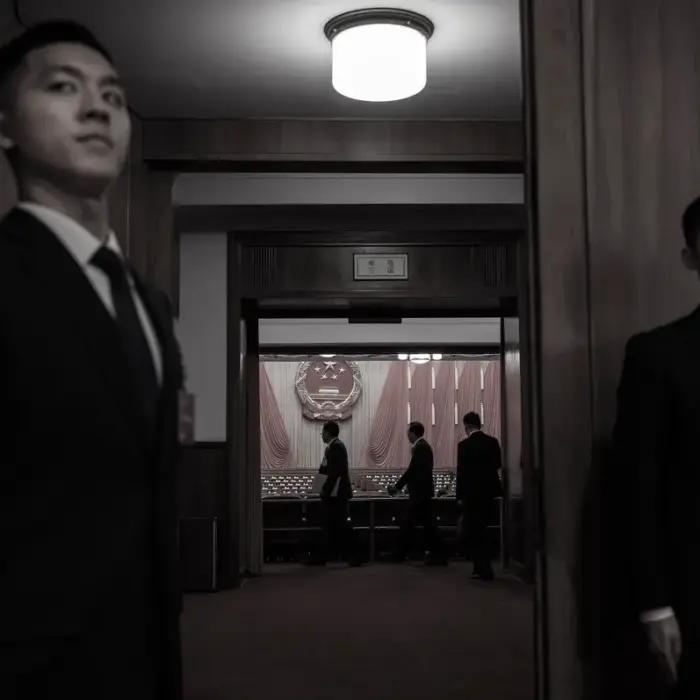
Taiwan is a self-governed democracy that the Chinese Communist Party (CCP) has never controlled but has vowed to annex by force.
Rising Stakes
Frank Tian Xie, the John M. Olin Palmetto chair professor in business and marketing at the University of South Carolina–Aiken and recognized as an expert on Chinese business, society, and economy, said Western governments have long voiced concern over Beijing’s aggression, but issuing such warnings by four governments was rare.
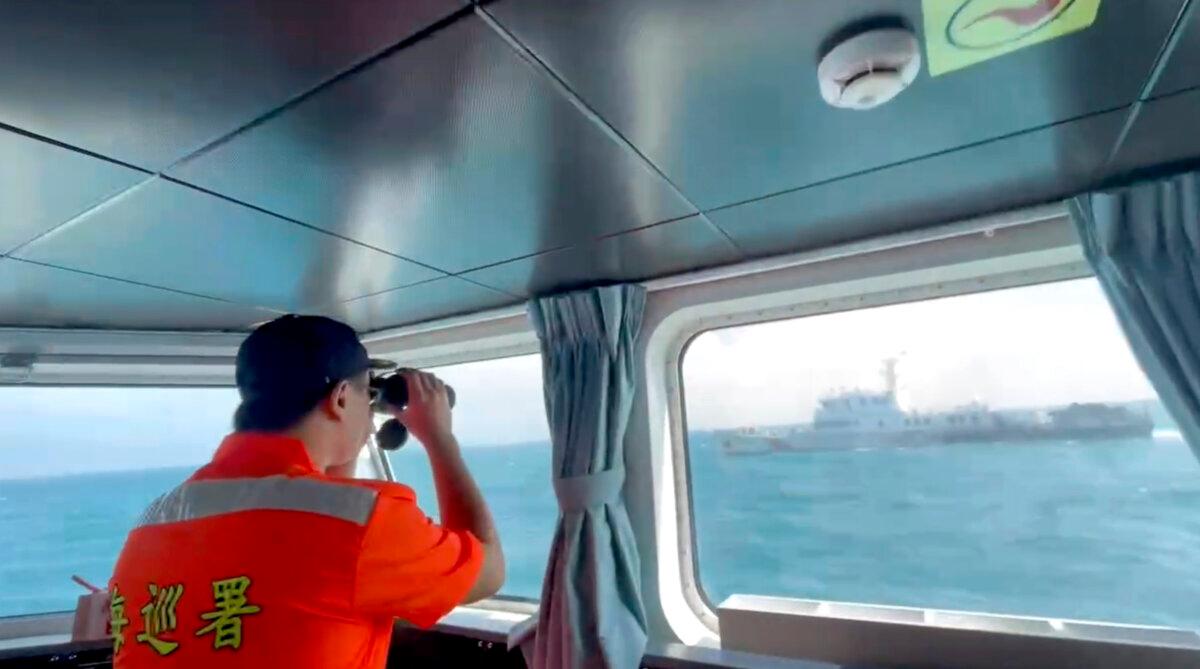
In this file image, a member of the Taiwanese coast guard monitors a Chinese coast guard boat as it passes near the coast of the Matsu islands, Taiwan, on Oct. 14, 2024, in a still from video. Taiwan Coast Guard via AP
“This shows these nations are increasingly attuned to the CCP’s growing military threat against Taiwan,” Xie told The Epoch Times.
“Stepped-up People’s Liberation Army (PLA) patrols around the Taiwan Strait could have serious repercussions for Indo-Pacific security.”
Lin Ting-hui, former deputy secretary-general at the Taiwan Society of International Law, said all four are NATO core members, and their remarks signal the alliance has sharpened its focus on defending the first island chain, which runs from Japan through Taiwan to the Philippines and is widely seen as a strategic buffer against China’s Pacific reach.
“These nations are not just defending Taiwan’s freedom of navigation but also expressing concern for Japan and the Philippines,” Lin told The Epoch Times.
Bolstering Taiwan’s Deterrence
Lin said Washington’s June decision to rename the U.S. Indo–Pacific Command back to U.S. Pacific Command reflects a bid to concentrate resources on China, with a stronger U.S. naval presence around Taiwan expected in the months ahead.
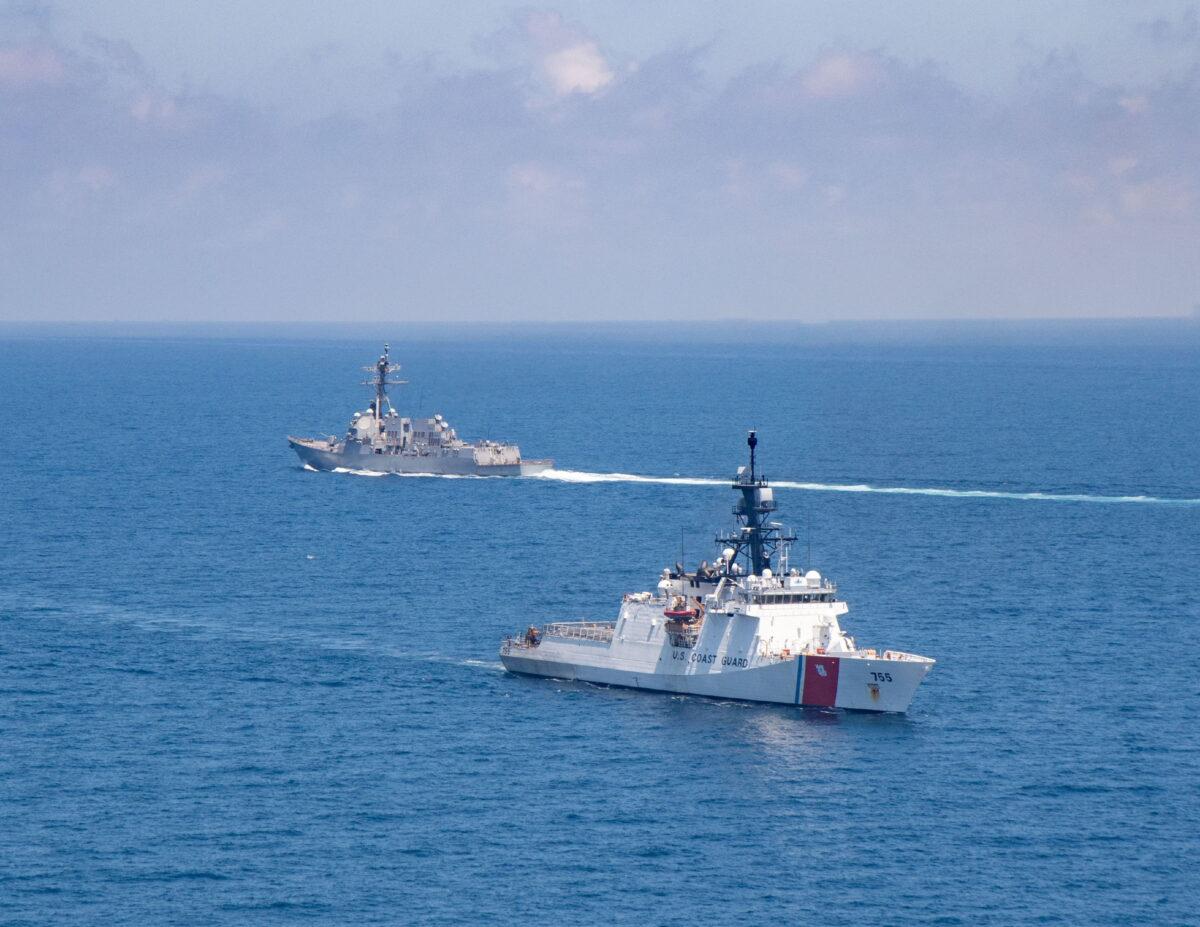
The Arleigh Burke-class guided-missile destroyer USS Kidd and U.S. Coast Guard cutter Munro conduct Taiwan Strait transits on Aug. 27, 2021. U.S. Navy/Handout via Reuters
“Surveillance, detection, and reconnaissance operations would all be part of that picture,” Lin said.
“U.S. Coast Guard cutters, government ships, and warships could deploy frequently off Taiwan’s eastern coast, demonstrating resolve to defend Taipei.”
“These shipments could accelerate in both timeline and scope, given Beijing’s aggressive behavior,” Lin said.
“The total value could grow well beyond the $14 billion currently under discussion, with greater emphasis on maritime capabilities.”
Beyond the United States, the UK, Germany, and France could also dispatch naval forces east of Taiwan to serve as a credible deterrent against the regime, Lin said.
Coercive Maneuvers
Lin said the CCP will wage a relentless campaign of maritime harassment to cement its claim of “effective jurisdiction” over Taiwan.
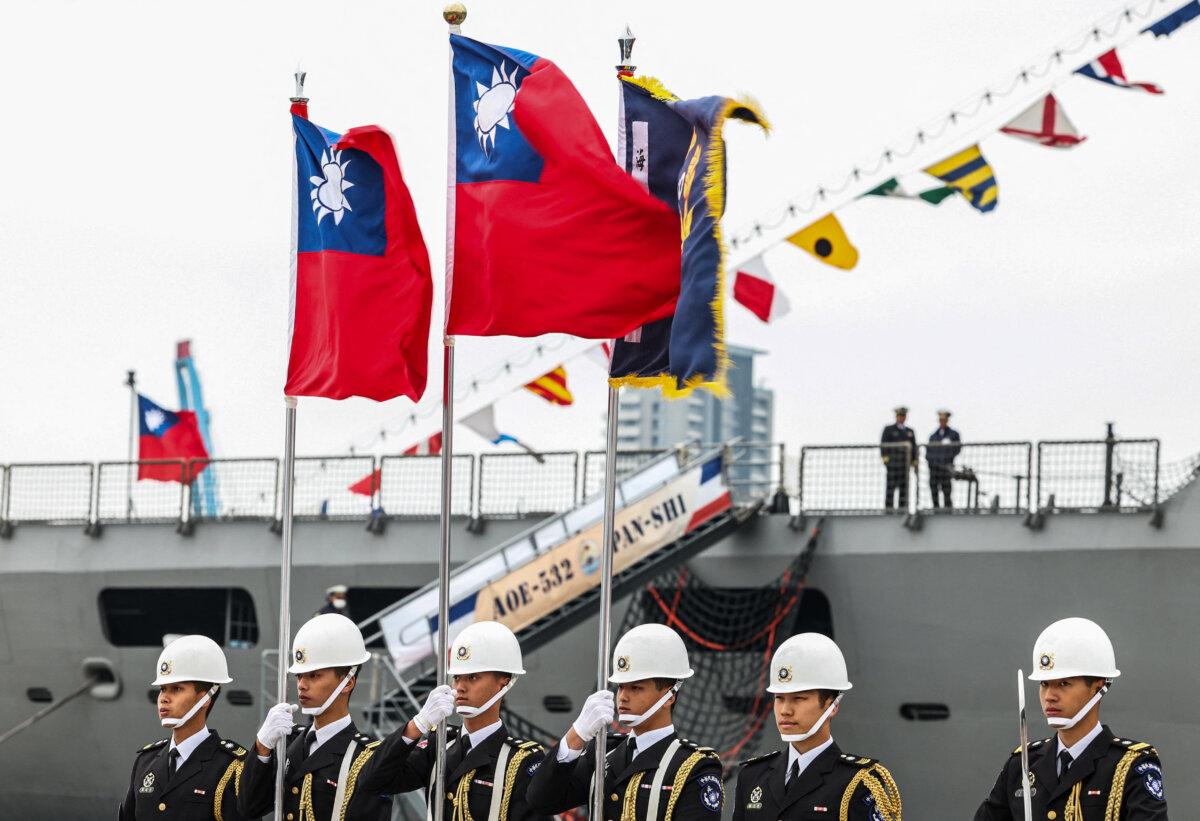
Taiwanese honor guards hold Taiwanese flags during an open day event for the public at the Keelung port on March 17, 2025. I-haw Cheng /AFP via Getty Images
“China will go beyond mere maritime patrols, escalating to the intimidation and even expulsion of civilian vessels,” he said.
“CCP officials will leverage these disruptive operations to prove their political loyalty, aiming to secure key appointments at the upcoming 21st Party Congress.”
Lin said these maritime tactics will inevitably trigger standoffs affecting not just Taiwan but neighboring nations such as Japan and the Philippines.
“For example, as Japan Coast Guard vessels step in to shield domestic fishing boats from Chinese harassment, the opposing fleets could easily find themselves locked in tense encounters,” he said.
“But China will seek to avoid war, because its objective is to demonstrate effective jurisdiction rather than spark a military conflict.”
Xie said that even as global scrutiny over Beijing’s territorial ambitions mounts, the drive to absorb Taiwan means the regime will increasingly blur the line between peace and conflict by weaponizing civilian and maritime domains.
“China will likely unleash unrestricted warfare against Taiwan, rather than relying on conventional artillery strikes or amphibious beach landings,” Xie said.
“The CCP is very likely to step up gray-zone operations against Taiwan, and the Taiwanese public must remain on high alert,” he said.