
China’s controversial “Law on Promoting Ethnic Unity and Progress” takes effect on July 1, sparking worldwide concerns that the ruling Chinese Communist Party (CCP) will expand its policies of forced assimilation and transnational repression.
The Chinese regime’s new ethnic law, which was passed in March, comprises 65 articles to further tighten its control over ethnic minorities in China and abroad. It has been condemned by human rights organizations, lawmakers, and government officials around the world.
Chen Ruifeng, deputy head of the Chinese regime’s United Front Work Department and director of the National Ethnic Affairs Commission, said at a press conference on June 24 that this law translates CCP leader Xi Jinping’s concept of “forging a strong sense of community for the Chinese nation” into the will of the state.
Forced Assimilation
Article 46 of the ethnic law stipulates that religious groups, religious schools, and religious venues must submit to “sinicizing religions” in China.
Wu Shaoping, a U.S.-based Chinese human rights lawyer, told The Epoch Times that “Sinicizing religions” in the new law means that religions in China must follow the directives and ideology of the CCP.
“It has already been doing that, such as altering the Bible, and the persecution and forced transformation of Muslims and Falun Gong practitioners in China,” Wu said.
Article 15 of the law mandates the national use of Mandarin Chinese over ethnic languages. International organizations, including rights organizations, Western think tanks, and United Nations experts, view the mandate as a cultural and linguistic erasure of ethnic identities that replaces regional identities with a homogenized national identity.
Related Stories
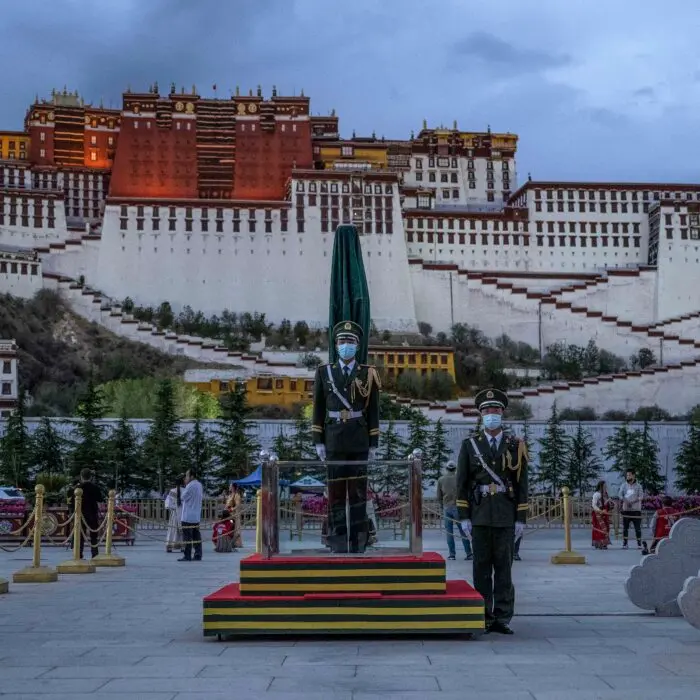
India-based Central Tibetan Administration said that Beijing is legalizing the forced assimilation of Tibetans and other ethnic minorities.
What the CCP is currently pursuing is intensified assimilation, Wang He, a U.S.-based China analyst and current affairs commentator, said of the new ethnic law.
The CCP’s emphasis is on the overarching concept of the “Chinese nation,” framing everyone as a member of this collective whole, he told The Epoch Times.
“Consequently, under this framework, there is a requirement to learn and use the standard Chinese language—Mandarin,” he said.
Since the CCP’s takeover of mainland China in 1949, and especially since the 1990s, the forced imposition of Han chauvinism in Xinjiang, Tibet, and Inner Mongolia has severely infringed upon the rights of ethnic minorities, Wang said.
“After Xi Jinping came to power, he adopted a very hardline approach to ethnic issues, as the country’s political landscape shifted sharply to the left,” he said.
“The CCP has attempted to systematically and forcefully erase the languages and cultural traditions of ethnic minorities—doing so across institutional frameworks, administrative structures, and the actual implementation of policies. This has caused the ethnic situation to deteriorate even more.”
The implementation of the new ethnic law indicates that the ethnic issues in China have deteriorated to a critical level under the CCP’s rule, and the regime has to resort to high-pressure tactics, he said.
Under the guise of “ethnic unity,” the CCP’s policies of forced assimilation targeting ethnic minorities are being accelerated, Wu noted.
“Through the new law, the Chinese regime directly elevated the management of ethnic minorities from administrative means to legal regulation, including the restriction of freedom of religious belief,” he said.
With the current economic downturn, the rapid deterioration of the situation on various fronts, and profound shifts in the international landscape, the circumstances are highly unfavorable for the CCP, Wu said.
“The Party has already recognized the severity of the societal issues it faces. It harbors deep concerns regarding the security of its own regime,” he said.
“That’s why over the past year, it has rolled out numerous laws concerning so-called national security, and it has also turned its attention to the issue of ethnicity.”
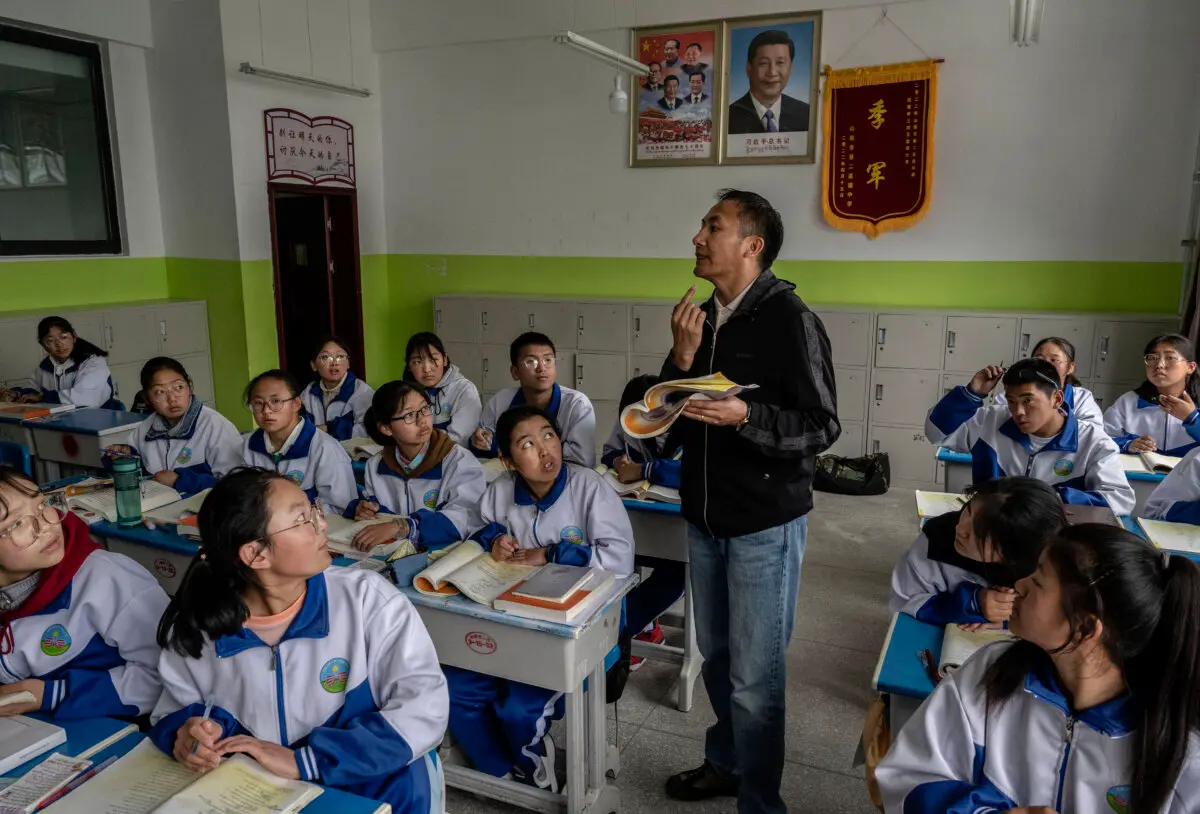
A Tibetan teacher teaches at the Second Senior High School, during a state-organized visit in Shannan, Tibet, China, on June 18, 2023. Kevin Frayer/Getty Images
Targeting Those Overseas
Article 63 of the law stipulates that overseas organizations and individuals who “engage in acts that undermine ethnic unity and progress or incite ethnic separatism” will be held legally accountable by the Chinese regime, further fueling concerns about the CCP’s transnational repression.
There is a large number of people from ethnic minorities—particularly Tibetans and Uyghurs from Xinjiang—living overseas, Wang noted.
“They speak out from abroad to protest the CCP’s ethnic cleansing and persecution, and to defend their ethnic culture and language. With the introduction of this new ethnic law, yet another tool has become available for the CCP to suppress and crack down on such activities even outside China,” Wang said.
Article 63 is a very clear and blatant threat to the world, Wu said.
“It explicitly targets people across the globe. It is not limited to overseas Chinese. The CCP can pursue so-called legal liability against anyone whose words or actions are deemed inconsistent with the CCP’s ‘Law on Ethnic Unity and Progress,’” he said.
“The CCP is exercising long-arm jurisdiction and carrying out transnational repression against people worldwide, in the name of the law.”
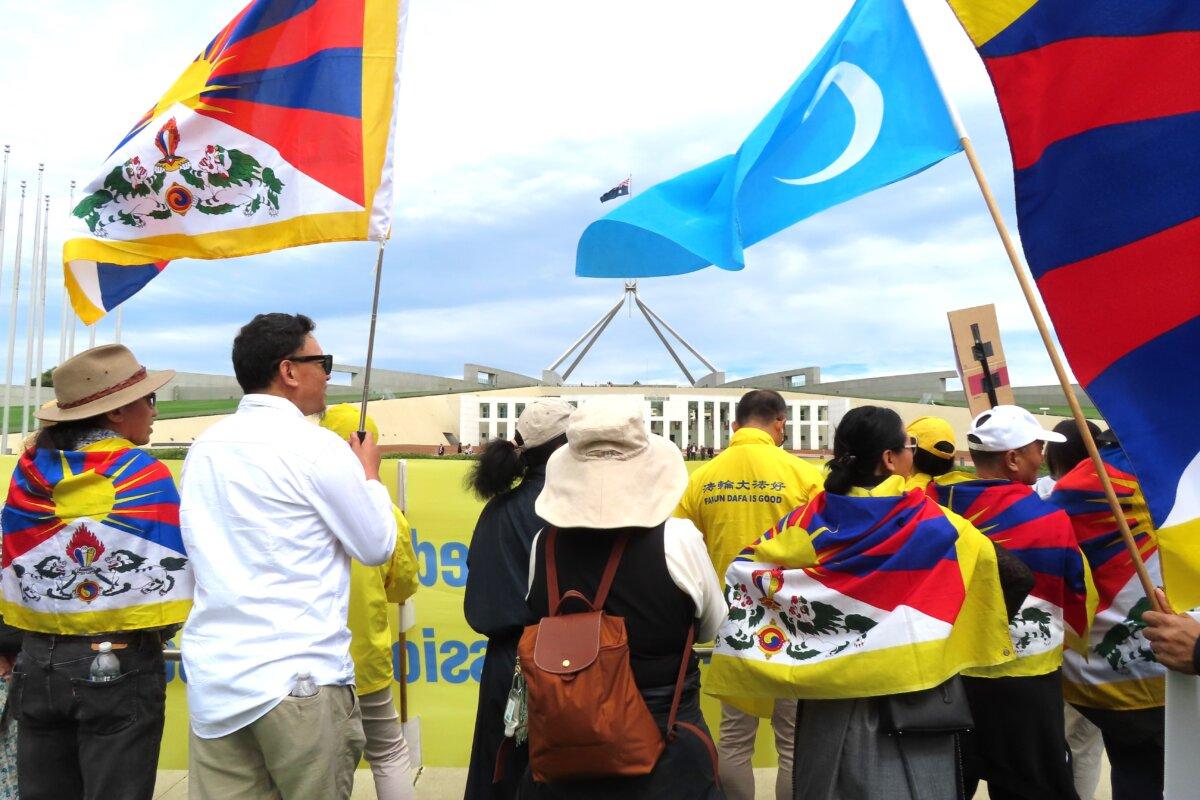
Falun Gong, Tibetan, and Uyghur communities protest CCP Foreign Minister Wang Yi’s visit in Canberra, Australia, on March 20, 2024. Rebecca Zhu/The Epoch Times
Wu pointed out that Article 31 explicitly outlines the measures that the CCP will take, which include “the use of modern technological means—such as the Internet, big data, and artificial intelligence—to conduct exchange activities; encourages and guides providers of online products and services to create and disseminate works and information that embody ‘the great unity of the Chinese nation.’”
It signals to the world an intention to comprehensively tighten online controls, and “to use these enhanced controls to restrict, or even effectively strip away, citizens’ freedom of speech,” he said.
Luo Ya, Tang Bing, and Reuters contributed to this report.